
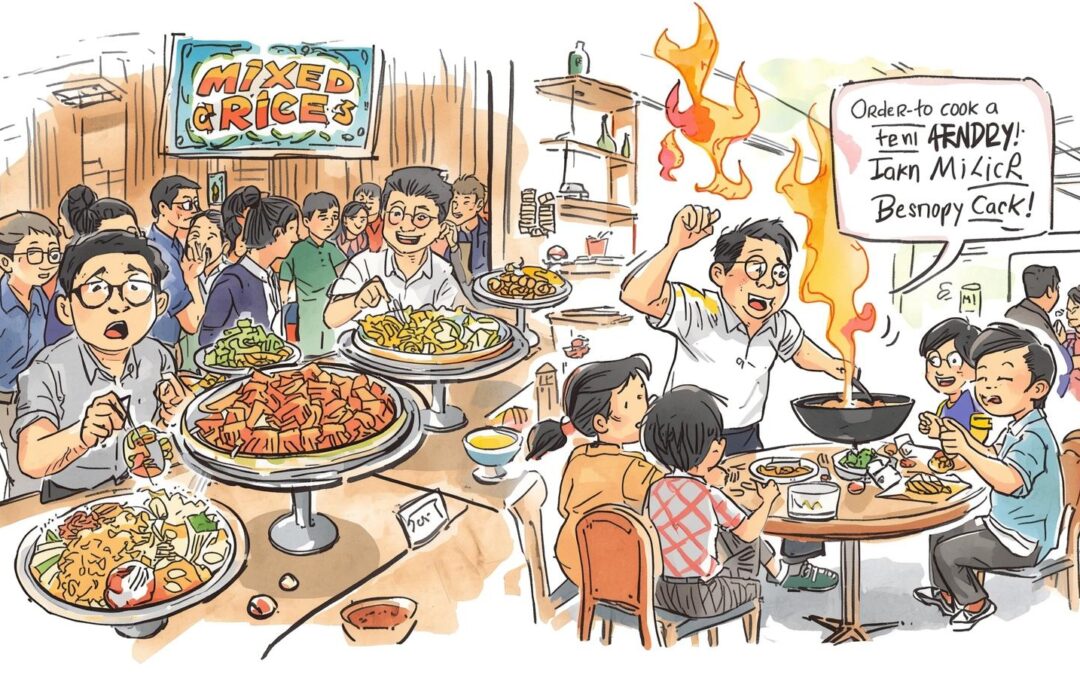
Below is a refined table comparison between Mixed Rice and Order-to-Cook, including how the chef decides what to cook vs. customers ordering what they want 👇
|
🍚 Aspect |
🥢 Mixed Rice |
🍳 Order-to-Cook |
|
⏰ Cooking Timing |
Cooked in advance, usually early morning or before lunch hours. |
Cooked only after order, prepared fresh for each customer. |
|
👨🍳 Decision Basis |
Dishes are made based on chef’s availability and what they think can sell well that day. |
Dishes are made according to the customer’s wish, following the order and preference. |
|
⚡ Speed |
Very fast – ready to serve instantly. |
Slower – typically 10–20 minutes wait while cooking fresh. |
|
📋 Menu Variety |
Limited to what’s displayed; depends on the chef’s daily selection. |
Wide and flexible; customers can choose from a full menu or request custom changes. |
|
🔥 Taste & Freshness |
Consistent flavour but less fresh, since cooked earlier in bulk. |
Freshly prepared with strong wok aroma (wok hei), served piping hot. |
|
🍽️ Portion Style |
Individual plate – rice with 2–3 selected dishes. |
Sharing-style dishes – meant for group dining with multiple plates. |
|
🧂 Customisation |
Minimal – “what you see is what you get.” |
High – can request less spicy, extra sauce, or specific cooking style. |
|
💰 Pricing |
💸 Budget-friendly (around RM6–20 per plate). |
💵 Mid-range (RM10–30 per dish, depending on type and size). |
|
🏠 Environment |
Usually found at hawker centres, food courts, or kopitiams. |
Located in coffee shops or small restaurants, often open-air style. |
|
👥 Target Crowd |
Perfect for office lunch crowd, students, or anyone in a rush. |
Great for families or friends looking for a casual, freshly cooked meal. |
|
🌡️ Food Temperature |
Often room temperature or slightly warm, depending on time and turnover rate. |
Always hot and fresh from the wok, served immediately after cooking. |
|
💭 Cooking Philosophy |
“👨🍳 Cook what we have time for, and what we believe will sell today.” |
“🍽️ Cook what customers want, the way they like it.” |
🍛 Comparison: Mixed Rice vs. 🏨 Hotel-Style Buffet
Even though mixed rice and a hotel-style buffet sit on opposite ends of the dining spectrum — one being humble and practical, the other polished and indulgent — they actually share a few core similarities in how they’re set up and experienced.
Here’s a full comparison table showing both commonalities and differences 👇
| 🍴 Aspect | 🍚 Mixed Rice | 🥂 Hotel-Style Buffet | 🔍 Commonality / Insight |
| 🍲 Serving Concept | Pre-cooked dishes displayed for self-selection. | Wide range of dishes displayed for self-service. | Both use a “see and choose” concept — diners pick what they like visually. |
| 👨🍳 Cooking Timing | Cooked in bulk before meal hours. | Cooked in bulk, often with live stations for freshness. | Both rely on batch cooking and presentation rather than individual orders. |
| 👀 Visual Appeal | Practical trays with everyday dishes. | Carefully plated with decorative presentation. | Both depend on display to attract appetite — people eat with their eyes first. |
| 🍽️ Choice & Variety | Around 10–20 local dishes depending on stall. | 50–100+ items across multiple cuisines. | Both offer variety and freedom to mix according to preference. |
| ⏱️ Speed of Service | Instant – pick and pay within minutes. | Instant – pick and eat at your own pace. | Both are ready-to-eat concepts with minimal waiting time. |
| 🌡️ Food Temperature | Usually room temperature or slightly warm. | Mostly warm or kept hot over heating trays. | Both rely on food warmers / trays, though buffet keeps temperature more controlled. |
| 💰 Pricing | 💸 Affordable everyday meal (RM6–20). | 💵 Premium dining experience (RM50–200+). | Price difference aside, both charge based on access to variety, not per dish. |
| 🧂 Customisation | Limited – only what’s available on display. | Limited – though some buffets have made-to-order stations. | Both offer limited customisation, compared to order-to-cook styles. |
| 👥 Target Crowd | Office workers, locals, students – quick lunch crowd. | Families, corporate guests, tourists – leisure dining. | Both serve many people at once, focusing on speed and variety. |
| 🏠 Environment | Hawker stalls or food courts – casual, no frills. | Hotel restaurants – clean, elegant, comfortable. | Both provide self-service freedom, but atmosphere differs drastically. |
| 💭 Philosophy | “Cook what sells today.” | “Serve abundance and satisfaction.” | Both aim to please through variety, letting diners enjoy freedom of choice. |
🌟 In Simple Words
-
Mixed rice = Everyday man’s buffet.
Affordable, efficient, and practical — built around local flavours and routine life. -
Hotel buffet = Celebration version of mixed rice.
More refined, more choices, but still the same joy of walking around and choosing what you love.


