🚀 Unlocking the 4 Keys to Real Success
A hopeful look at navigating Income, Work, Time, and Savings
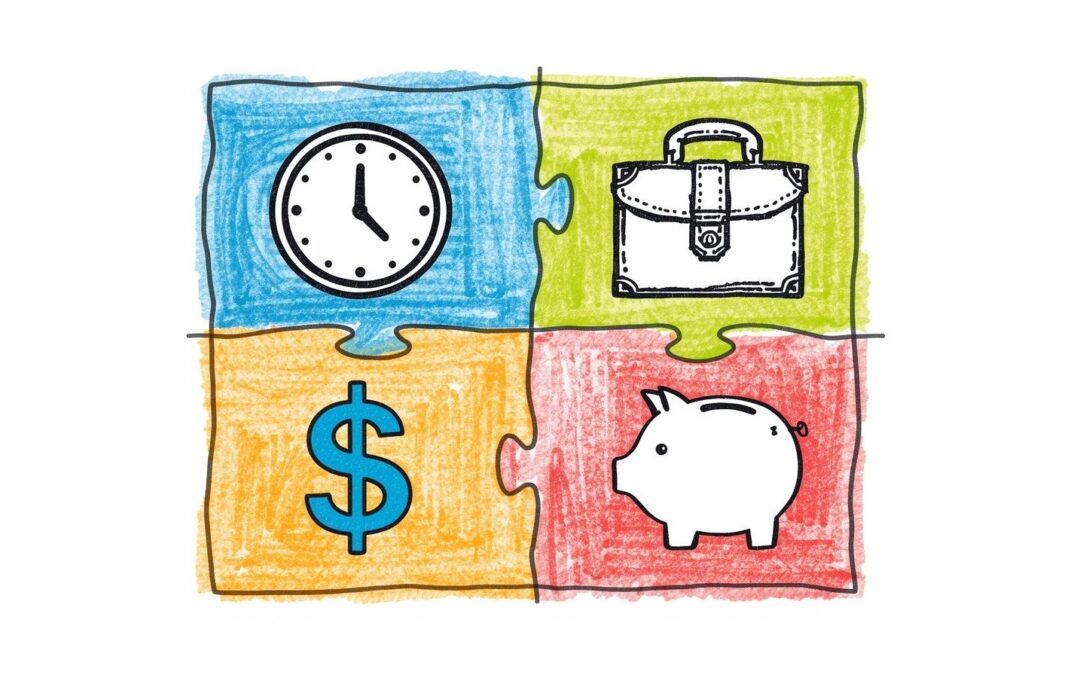
I often find myself thinking about how the four main balls we juggle—Income, Work, Time, and Savings—just refuse to cooperate. 🤹♀️
It’s a strange paradox of life and business. We expect them to be in sync: work hard, get busier, earn more income, and build more savings. But reality is rarely that simple.
Here’s what I’ve observed:
-
The “Busy but Broke” Phase: It’s possible to be at an absolute busiest, with a mountain of work… but income is low. This is common in the early days or when a person is investing “sweat equity” into a new project. There is no time, and certainly no savings. 🏃♂️💨
-
The “Cash Flow Illusion”: A client pays a large invoice, and the bank account looks healthy. 🎉 Relief! But this doesn’t automatically mean the income stream is stable. Sometimes, that payment marks the end of a project, and the pipeline behind it is empty. That sudden “saving” isn’t a saving at all; it’s just future-proofing for the gap ahead.
-
The “Investment Trap”: Then there’s the opposite: we’re incredibly busy, and projects are rolling in. This should be when savings grow, right? Not always. This is often when costs explode. 💥 We need to invest in new staff, better software, or more resources just to manage the work. That “busy” period can actually be the most expensive, draining any potential savings before they even materialise. 💸
🧑💼 The Professional's Dilemma
I see this so clearly in professional services, like for accountants or outsourced CFOs. Profitability is a complex beast.
-
Client Types: A professional’s income is massively affected by client structure. Are they monthly retainers, quarterly reviews, or one-off annual projects? A stream of monthly clients provides stable cash flow, while annual clients can create a “feast or famine” cycle. 🗓️
-
The “High-Fee” Myth: A single client with a high fee doesn’t automatically equal high profit. In fact, they can be the opposite. That client might require constant, daily attention, or demand highly specialised skills (e.g., complex IT integrations, niche industry knowledge) that are not easy to find or cheap to employ. 🧑💻
-
Cost vs. Profit: If the staff cost and technical resources required to service that “premium” client are higher than the fee they pay, you’re actually losing money. The work is high, time is gone, but the net income is negative.
-
The “Value-Add” Trap: Then there’s all the “value-added” work that is actually just FOC (Free of Charge) work. 😥 This can happen for many reasons: it might be a responsibility to fix a past issue, fulfilling a promise made, or—most commonly—a simple underestimation of the project’s complexity. Every FOC hour directly eats into any potential profit.
-
The Billing Conundum: Cash flow is king, but it’s a double-edged sword. 🧾 If we collect fees upfront, clients’ expectations can become incredibly difficult to manage, and we may even need to issue refunds. But if we wait to bill upon completion, we face the very real risk of late payments or, even worse, bad debts. This directly drains savings long after the work is done.
🔭 An Accountant's-Eye View of Survival
My role also gives me a unique window into the sheer fragility of other businesses. I see the real ups and downs of my own clients. 🎢
It’s humbling. I see how “missing the right timing” by just a fraction can change a company’s entire destiny. I see the devastating impact of “one wrong decision,” but also the heavy “cost of no decision”—where paralysis and failure to act leads to the same outcome.
It’s a stark reminder that for every success story we see celebrated on stage 🏆, there are countless untold experiences of failure. We only see the survivors, not the many who were filtered out.
We see the “rich get richer,” but we also know the old wisdom: wealth doesn’t last past three generations. It makes me wonder… in this high-speed, high-stakes world, what happens to the inheritance of knowledge? What about the craft and skills of an industry? Are we losing these in the chaos?
🤷♂️ The Experience & Underemployment Trap
And then there’s perhaps the most personal challenge: the “underemployment trap.”
I look at my own skillset. I know I am infinitely more capable, skilled, and efficient than I was 5 or 10 years ago. My experience is solid. 📈
But does the income reflect that decade of growth? Shockingly, no.
It’s a painful paradox. We can find ourselves in a situation where:
-
Getting “a job” isn’t simple. Many employers seem not to prefer candidates with deep entrepreneurial or specialist experience.
-
The offers are disheartening. The roles that are available might offer less than half of our usual income, completely devaluing our hard-won expertise. 📉
-
We’re trapped by commitment. We can’t just walk away. We still have professional commitments to existing clients, even if that work now only brings in 30% of our previous income. We’re loyal, so we continue, but we’re working for a fraction of our worth.
This is the very definition of underemployment: having the skills and the capacity, but not being able to find work that truly values or pays for them. It feels like moving forwards and backwards all at the same time.
🌊 Surviving the Great Shifts & Finding Meaning
On a personal level, this misalignment is incredibly stressful. When we find ourselves in debt or having overspent, it’s often a result of these cycles. And the worst part? We can’t get the time back. ⏳ Those lapsed months or years are gone.
This struggle for alignment often doesn’t even factor in the most important parts of time: the time for family or the personal breathing room to live the life we want. And all this is before we even consider major life disruptions like illness, which can derail everything.
Now, we’re all facing even bigger waves of change:
-
The COVID-19 Pandemic: 🦠 This was a global lesson in uncertainty. Some professions thrived, while others had to fight for basic survival.
-
The AI Evolution: 🤖 This is the new wave. For some, AI is a powerful tool creating new opportunities and efficiencies. For others, it’s making the market incredibly competitive, turning what was once a stable career into a daily struggle to stay relevant.
It’s a constant balancing act. Finding that sweet spot where we have meaningful work, manageable time, a stable income, and growing savings feels like the ultimate, and perhaps most difficult, achievement.
We are told that it is more blessed to give than to receive, but in reality, so many of us are trapped, living in calculation and chasing the feeling of superiority from personal achievement. Finding a balance seems to be the real, unspoken struggle.
Just some thoughts for the day. Does this resonate with you? 🤔
