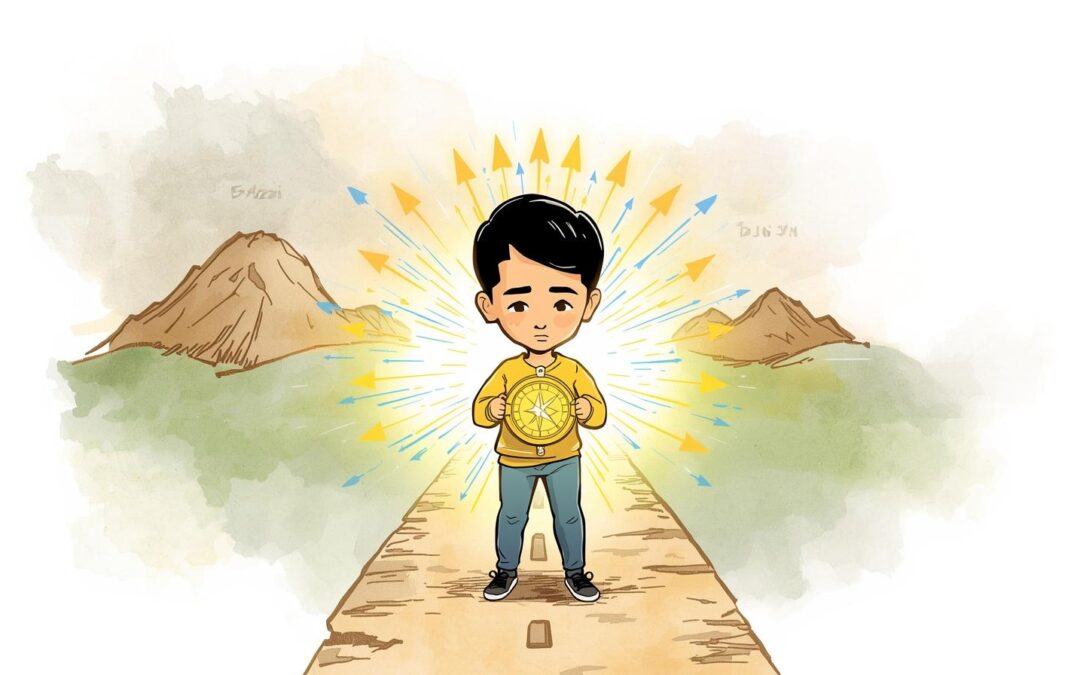
Moving beyond 'religious data' and passive forecasting to actively manifest your goals with Bazi and QiMen
I recently attended a training session by Joey Yap, and as I’ve been processing the information, a few key ideas have really stuck with me. I find them especially relevant as I delve deeper into the complexities of Bazi and QiMen Dun Jia, and I wanted to share my reflections.
1. 🕊️ Spiritual vs. Religious: Whose Experience Is It?

One of the most clarifying definitions I heard was the distinction Joey Yap made between being ‘spiritual’ and ‘religious’.
-
Spiritual = Your own experience.
-
Religious = Other people’s experience.
This simple breakdown reframes the entire journey. It suggests that true spirituality isn’t just about following established doctrines, but about having your own direct, personal realisations. It’s the shift from “I was told this is true” to “I have experienced this to be true.”
2. 🧠 Intuition: Your Personal Information Filter

Building on this, Joey Yap offered a brilliantly practical definition of intuition.
He described intuition as the ability to filter unimportant information.
This is a crucial skill, especially in Bazi and QiMen studies. A chart is filled with a vast amount of complex information—Stars, Doors, Stems, and Palaces. It’s easy to get paralysed by data. Intuition is our internal mechanism for discernment; it’s the tool that helps us filter the ‘noise’ and pinpoint the one or two key factors that are most important right now.
3. 🎯 Forecasting vs. Manifesting: From Victim to Strategist

This ability to filter leads to another key distinction: the difference between ‘forecasting’ and ‘manifesting’.
-
Forecasting is passively seeing what the data (like a Bazi chart) suggests is likely to happen. It’s knowing the map of the weather.
-
Manifesting is actively using that information to create a better outcome.
The danger lies in relying too much on forecasting, on just looking at ‘Destiny’. Some people get stuck here. They ask, “What am I going to do if the forecast is bad?” This mindset can lead to paralysis or a feeling of victimhood, where we are simply waiting for our ‘fate’ to happen to us.
Manifesting, on the other hand, focuses more on the desired outcome. It turns the question around: “Knowing the potential challenges, what do I want to achieve, and what’s my strategy?”
This is where its real power lies. Whether you achieve the exact outcome or not, the process of manifesting helps you to clear up your mind. It forces you to define a rational next step forward and get crystal clear on what outcome you truly want to achieve.
This is the essence of QiMen’s application as a Warcraft strategy. We don’t just predict the battle; we use the intel to choose the right time, direction, and strategy to win the battle. We move from being a passive observer to an active strategist in our own lives.
4. 🗺️ Mapping Your Journey: Past, Present, and Future

QiMen gives us a powerful framework for understanding this journey through time:
-
📜 The Past (Early Heaven): This is often reflected in our Karmic Palace. It’s our ‘factory settings,’ the influences, baggage, and unresolved themes we bring with us.
-
🌟 The Future (Later Heaven): This relates to our Destiny Palace. It’s our potential, our aspirations, and the direction we are moving towards.
-
➡️ The Present (Today): This is the QiMen Day Chart. This, for me, is the most critical part—it’s the immediate battlefield, the current environment, and the energies available to us right now to take action.
5. 🎧 The Connection: "If You Remember It, It's for You"

This is where all these ideas click together perfectly. I recalled a point shared by Kenneth, one of Joey Yap’s members, about a year ago: when Joey Yap speaks, “what you hear it / you remember it… it’s for you.”
When we sit in a seminar or analyse our complex charts, we are surrounded by “other people’s experiences” (Religious) and a sea of data from our Past and Future Palaces.
Your intuition (🧠) is the filter.
The specific insights you “hear” and “remember”—whether from a teacher’s lecture or a detail in your own Karmic Palace—are the ones that have made it through that filter. At that moment, the information stops being just data and becomes “spiritual” (your own experience).
They are the strategic messages from your intuition, telling you precisely what you need to focus on for your Day Chart—for today.
My main takeaway is to trust that inner filter. The path forward isn’t just about ‘forecasting’ our lives, but about using this focused, intuitive wisdom to ‘manifest’ a better one.
