

An Empowering Guide to Master Your Unique Reality, from Daily Costs to Lifelong Dreams
In Malaysia, we are masters of balancing the complex. We navigate the ‘rojak’ of our cultures, the nuances of ‘mamak’ teh-tarik preferences, and the ever-present challenge of traffic. But the most complex system we must all navigate is our own personal economy.
Managing your money 💸 is not a simple maths problem. It is a deeply psychological, emotional, and often chaotic challenge. It’s about more than just Ringgit and Sen; it’s about fulfilling your human needs.

This is where Maslow’s Hierarchy of Needs provides a powerful lens:
- Physiological Needs: Your ‘Core Four’ (衣食住行 – Food, Shelter, etc.). Your budget must start here.
- Safety Needs: A secure home, a stable job, an emergency fund, medical insurance, a car that runs.
- Love & Belonging: Spending on family, gifts for friends, social outings, club memberships, and even the routine trip to visit family members overseas.
- Esteem Needs: Expenses that build self-respect. This can be a gym membership, following gurus for learning (ticket prices), professional certifications, or even plastic surgery and beauty expenses 💄.
- Self-Actualisation: The very top—spending on your ultimate potential, like starting a passion business, extensive travel ✈️, or deep, fulfilling hobbies.
Many financial guides fail because they talk about Level 5 (investing for “freedom”) while ignoring that most of us are in a daily struggle to secure Levels 1 and 2.
Your budget is not a prison. It is a tool to build this pyramid, one level at a time, in the face of your specific, messy, and unique reality.
🏛️ Part 1: The Foundation (Core Costs & Modern Obligations)

These are your non-negotiables. But even these are more complex than they seem.
- 衣 (Clothing): From office wear to ‘baju raya’ and kids’ uniforms.
- 食 (Food): Groceries, work lunches 🍛, family dinners, and food delivery. This is often your most flexible expense—the easiest to cut back when income drops.
- 住 (Housing): Often your largest fixed expense. This is a critical distinction. Fixed costs are incredibly difficult to change quickly (like your rent or mortgage). This category also includes:
Utilities: TNB, Air Selangor, Indah Water.
Service Charges: The apartment monthly service charge and sinking fund.
Hidden Commitments: Those “small” monthly subscriptions that are actually operating leases or long-term contracts, like Coway/Cuckoo water filters, or appliance rental plans. These are fixed “debt” in disguise.
- 行 (Transport): Your car loan (fixed), petrol (flexible), tolls, maintenance, and Grab rides.
📈 Part 2: Expanding Your Financial Universe (The Good, The Bad & The Unseen)

Life is messy. Your budget needs to account for all of it.
Beyond the core four pillars of survival, our financial universe expands dramatically. This is where we must account for every other aspect of our modern lives: the long-term investment in education for ourselves and our children; the heavy burden of debts and obligations, from PTPTN to informal family loans; and the non-negotiable costs of taxes and compliance. This universe also includes the “good” inflows from investments and side gigs, the “bad” outflows from financial drains like gambling or bad investments, and the “unseen” leaks from digital subscriptions, impulse buys, and professional fees. Acknowledging this entire complex ecosystem—from your child’s tuition and your website hosting to your tax bill and your ‘guru’ workshop tickets—is the only way to gain true control over your finances.
Education (Investing in the Future) 🎓

-
Early Years: Kindergarten and nursery fees.
-
School-Age: Tuition, plus the constant small, unbudgeted fees for artwork 🎨, sports uniforms, and class outings.
-
Tertiary: Saving for or paying off college/university fees.
-
Self-Development: Costs for workshops or guru learning programs that promise to improve your income or mindset.
Debts & Obligations (The Financial Levers)

-
Formal Debt: Credit cards, personal loans, PTPTN, BNPL.
- The Debt Mix (Crucial!): Many people get this wrong.
- Bad Mix 1: Using a short-term loan (like an overdraft) to finance a long-term asset (like a property). This creates massive cash flow stress.
- Bad Mix 2: Taking a long-term loan (e.g., 9-year) for a short-term, depreciating asset (like a car). This keeps you in debt long after the asset has lost its value.
- Debt Crisis Stage: Many are past budgeting and are in survival mode, dealing with long outstanding credit card debts or entering debt conversion stages (e.g., AKPK).
-
Informal Debt: Loans from / to friends or family in need. Rule: Never borrow / lend money you cannot afford to pay / lose forever.
Investments, Risks & Irregular Income

-
Inflows (Money In): Rental income, side-gig commissions, annual employment bonuses 🎁, or sudden windfalls.
-
Outflows (Money Out): Your cash contribution to your stock portfolio or the downpayment for a property investment.
-
Financial Drains (The Leaks): This is a huge, often hidden, category.
-
A spouse or family member with a gambling habit 🎲 or who regularly loses money in the stock market. This is an uncontrolled “black hole” in the budget.
-
Investment Portfolio Risk: Holding a large property portfolio is great, until an economic crisis (like the pandemic) hits, you cannot rent them out, and you face a forced sale or bankruptcy.
-
-
Digital Subscriptions: Modern “utilities” like Youtube Premium, Astro, cloud storage (Google Drive), and professional software needed for work or side-gigs.
Compliance, Taxes & Obligations

These are the non-negotiable costs of just existing in society.
-
Income Tax: A major annual or monthly (PCB) expense that must be planned for.
-
Official Compliance: Costs like a foreign wife’s visa renewal, passport fees, or professional body memberships.
🗓️ Part 3: Timing is Everything (Frequency, Shocks & Disasters)

A budget fails when it only looks at monthly costs.
- Daily / Weekly / Monthly (Recurring): Food, petrol, tolls, utilities, loan instalments, rent, and subscriptions. These are predictable.
- Annual or Semi-Annual (The “Sinking Funds”): These are the budget-killers. You must prepare for them by saving 1/12th of the cost each month.
- 🚗 Car insurance and road tax.
- 📜 Professional membership fees.
- 🏡 ‘Cukai Pintu’ & ‘Cukai Tanah’ (Assessment & Quit Rent).
- 🎉 Festive spending (‘ang pows’, ‘duit raya’).

-
Life’s Milestones & The Great Unexpected (The “Oh No!” Fund): This is what your Emergency Fund is for. These are not “wants.” They are life-altering needs.
- 👶 New Additions: Your wife is pregnant, or you’re planning for another child. This is a massive new set of recurring costs.
- Household Shocks: These are not upgrades. This is when the refrigerator breaks down, the roof starts leaking, or the air-cond compressor dies. They must be replaced.

-
-
Personal Disasters: The ones no one wants to plan for:
- Divorce: Instantly splitting one household’s finances into two, often disastrously.
- Spouse Suddenly Passed Away: The devastating emotional and financial shock of losing an income (or a caregiver).
-
Unexpected situation happened to children / parents: A sudden illness, an accident, a long-term disability.
-
👨👩👧👦 Part 4: Your Financial Reality (Why "Rules" Often Fail)
This is the most important part. A budget is personal. The popular “50/30/20” (Needs/Wants/Savings) rule is a privilege, not a plan. It fails because it ignores your starting point, your income structure, and your philosophy.
A) The Starting Line (Your Financial Profile)

Not everyone starts from the same place. Your “why” and “how” for money are unique.
- The Daily Worrier:
- Profile: Many people need to worry for daily expenses. Their financial horizon is weekly, not long-term.
- Top Priority: Maslow’s Level 1. Securing the next meal, paying the rent. Long-term planning is an impossible luxury.
- The Dependent Adult:
- Profile: This is not a “born rich” individual. This is someone who, even at age 40, still needs to use money from parents.
- Reason: Often due to a failed business, chronic underemployment, or crippling debt. They are financially tight and rely on the family safety net just to maintain a basic living standard. Their budget is a constant negotiation between their reality and their dependence.
- The Self-Made Provider:
- Profile: They base their effort on letting family members have a good life. Their budget is an instrument of love and responsibility.
- Top Priority: Building Maslow’s Level 2 (Safety) for their entire family, often at the expense of their own “wants.”

- The Born Rich / Inheritor:
- Profile: Their financial foundation is secure, often from assets inherited from parents, a spouse, or a large life insurance compensation payout.
- Top Priority: Not survival, but wealth preservation. Their “budget” is about asset allocation, tax efficiency, and managing a legacy, which brings its own set of complex challenges.

- The Superstar (The “New Rich”):
- Profile: Not born rich or a traditional entrepreneur. This is the artist, KOL, or influencer who suddenly became famous and wealthy.
- Top Priority: Managing a massive windfall. They often lack the financial literacy to handle sudden wealth, making them vulnerable to overspending, bad investments, and hangers-on. Their challenge is turning fast income into lasting wealth.

-
The Grey Area Operator:
- Profile: Works in less-regulated or illegal businesses. Income cannot be measured using usual categories.
-
Top Priority: Cash flow and risk. Their income is high but non-transparent, non-bankable, and comes with extreme legal risks. A “budget” here is less about spreadsheets and more about managing large sums of cash, liquidity, and “exit” strategies.
B) The Business Owner's Trap

-
The Blurring of Lines: Many small business owners find it difficult to split business and personal expenses.
-
The “Why”: The banking system often doesn’t support micro-business loans, forcing them to be risk-takers. They use personal funds, credit cards, or raise money from family to support their business or dreams. This makes “personal budgeting” almost impossible.
C) Spousal & Family Dynamics
-
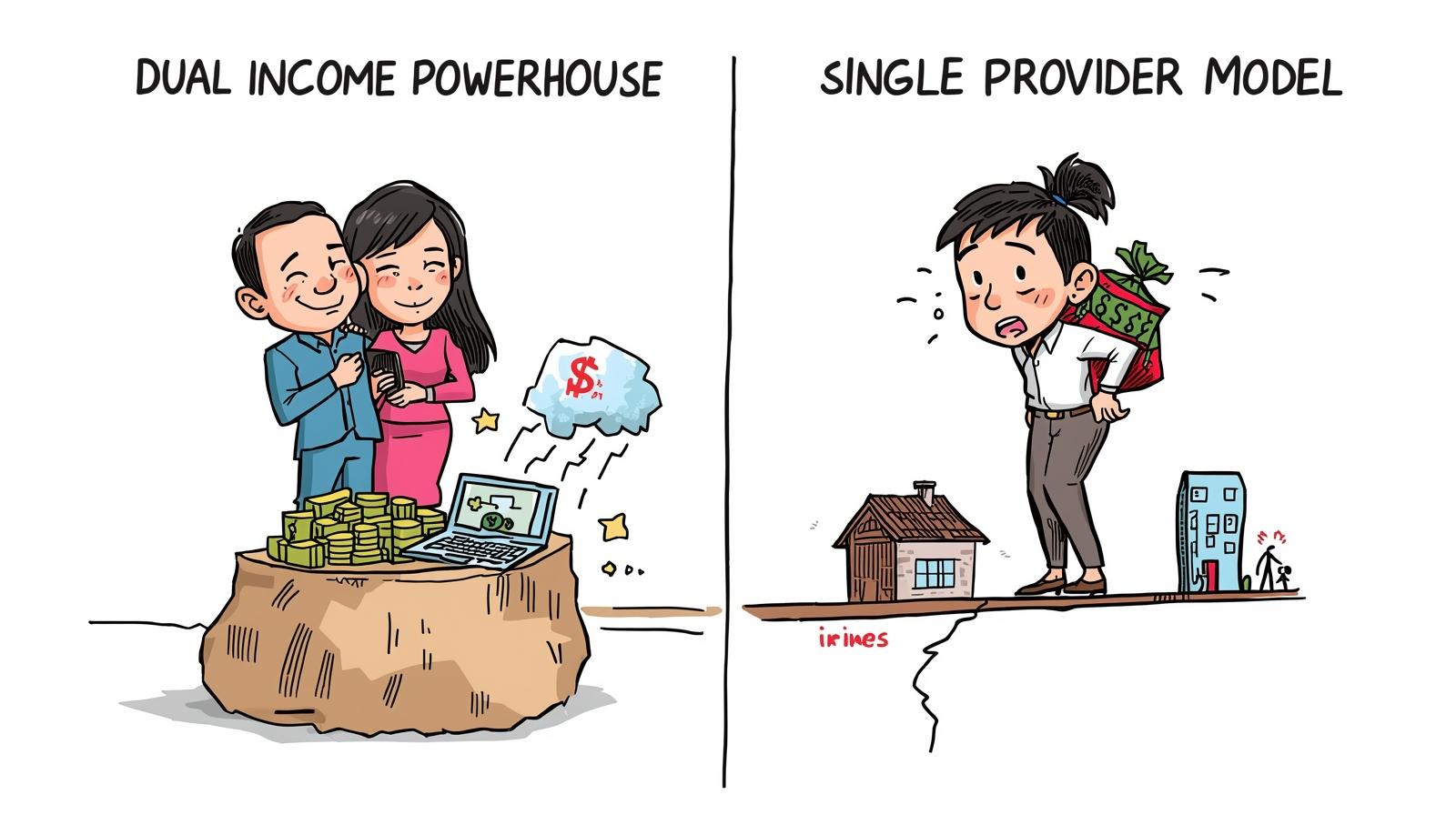
The Dual-Income Powerhouse: A local wife that has her own income & can share finances creates a powerful economic unit.
-
The Single-Provider Model: A wife (or husband) who is not working and requires RM4,000 a month for household/personal expenses creates a different, fixed-cost structure.
-
The Financial Drain: A spouse with a gambling or trading addiction can sabotage even the best-laid plans.
D) The Proportionality Problem (Income Extremes)

-
The RM5,000/mo Earner: Housing at RM2,000 is 40% of their income. It’s a massive, fixed burden.
-
The High Earner (RM50,000/mo): The same RM2,000 housing is only 4%. Their “large” costs are different.
-
The Super Earner (RM800k – RM2M p.a.): Can pay off a RM2 Million bungalow in less than 3 years. Their focus is not budgeting, but capital allocation and tax efficiency.
E) The Instability Problem (Variable Income & Shocks)

-
Profile: Freelancers, gig workers, business owners, or the temporarily unemployed (zero income).
-
Strategy: You cannot use percentages. The only strategy is cash flow management and a ruthless focus on Fixed vs. Flexible costs.
-
Fixed Costs (The Killers): Rent, car loan, insurance premiums, Coway. These must be paid.
-
Flexible Costs (The Levers): Food (cook vs. eat out), entertainment (cut to zero), shopping.
-
F) Your Financial Philosophy (Appreciation vs. Depreciation)
-
The Wealth Builder: Cares about the value of their money. They save to buy capital-appreciating assets (shophouses, property, stocks). They have extra to spend, save, and invest.
-
The Lifestyle Buyer: Prefers to spend on depreciating assets that bring immediate joy (a sports car 🏎️, luxury watches, the latest smartphone). This is an “Esteem” purchase (Level 4), and it’s not “wrong,” but it is a choice with long-term financial consequences.
Conclusion: From Chaos to Clarity

Managing your expenses is not about becoming a perfect, boring robot. It is a messy, human process of balancing your needs (Maslow’s Levels 1-2), your wants (Levels 3-5), and your unique, complex reality.
It’s about knowing which of your costs are fixed and which are flexible. It’s about anticipating the annual bills and the household shocks (the broken fridge, the leaking roof). It’s about having honest conversations with your spouse about their spending and your shared goals. It’s about acknowledging your starting point—whether you’re a Daily Worrier, a Superstar, or a Dependent Adult—and planning from there.
Your goal is not just to “have a budget.” Your goal is to build a strong foundation (Physiological & Safety) so that you have the stability and freedom to pursue what truly matters to you: your family, your passions, and your purpose.
Start by tracking. No judgement. Just track. See where your Ringgit is really going. That clarity is the first, most powerful step towards financial peace. 🌟
